Almost every studio starts the same way: a phone number, a WhatsApp group and a sheet with the week's timetable. It works — until it doesn't. The trouble is you rarely notice the day it stops working. You notice later, in classes with an empty machine, unanswered messages and evenings spent confirming bookings.
This article is for anyone running a Pilates, yoga or group-class studio who feels WhatsApp is running the business more than it should.
Why WhatsApp works so well at the start
There is nothing wrong with starting on WhatsApp. Clients already have it, there is nothing to set up and the relationship stays personal: the client writes, you reply, the class is booked.
With 30 or 40 clients, that is enough. The timetable fits in your head, you know who is coming to each class and a cancellation is solved with one message to the next person.
5 signs it's no longer enough
- You answer messages after hours. If the last booking of the day arrives at 11 p.m. and the first at 7 a.m., your studio is open 16 hours a day — on your phone.
- Some classes are full and others half empty in the same week. Without seeing free spots, every client asks for their usual time. Popular classes fill up and the rest stay empty.
- Last-minute cancellations leave machines empty. When someone drops out at 5:30 p.m. for the 6 p.m. class, there is no time to message three people and wait for answers.
- You've booked two people on the same machine. Once is enough to see that the paper grid and the messages no longer match.
- At the end of the month you don't know exactly who paid and how many classes they took. Bookings live in WhatsApp, payments in the bank and invoices in another program.
If you recognise two or more, the cost is already real: your hours, lost seats and clients who give up trying to book.
What changes when booking moves to an app
The difference is not technology, it is who does the work. With app booking:
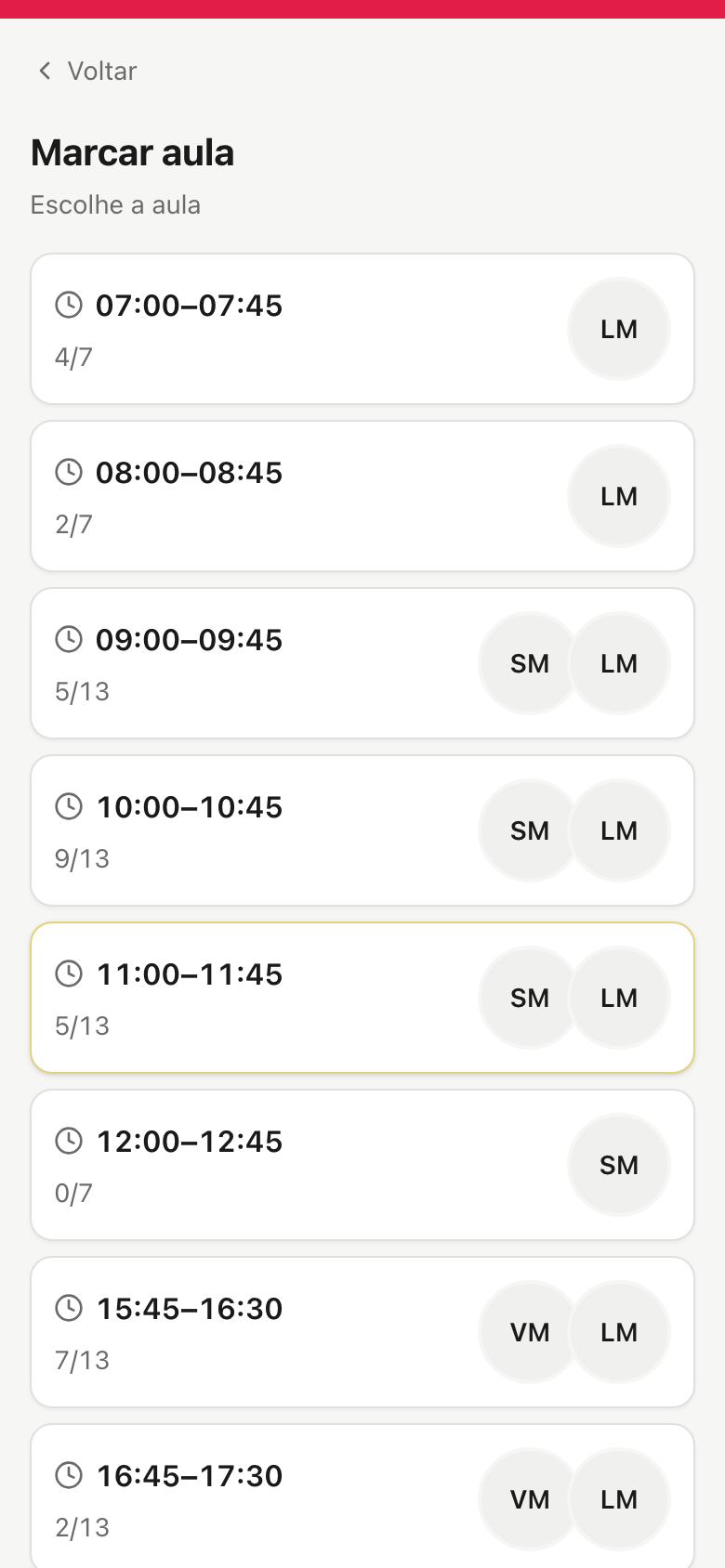
- Clients see free spots and book on their own, at any time, without waiting for you.
- Capacity is enforced by the system. In an equipment studio each class has as many places as Reformers; nobody can book the seventh place in a class of six.
- The waitlist handles cancellations. When someone drops out, the seat is offered automatically to the next person in line.
- Credits and payments are tied to bookings. Clients know how many classes they have left and you know who has paid.
At Breath Pilates, the two studios where Studio App runs every day, more than 1,200 bookings a week are made by the members themselves, without going through reception.
How to switch without losing clients: a 4-step plan
1. Announce the change with a date and a reason
Not "from now on it's all in the app". Rather "from the 1st you can book and cancel any time, and see the free spots in every class". The reason has to be good for the client, not just for you.
2. Do the first sign-in with them
The biggest hurdle is the first login. Choose an app that needs no app store and no password: the client opens a link, gets an SMS code and is in. If someone struggles, help them after class — it takes two minutes.
3. Keep WhatsApp for talking, not for booking
WhatsApp remains great for questions, notices and relationships. It just stops being where classes get booked. A friendly, consistent reply helps: "You can now book this class directly in the app — here's the link."
4. Allow two to three weeks of transition
During the transition accept both, but enter in the app everything that arrives by message. Before long most clients book on their own, because it is faster for them too.
Questions we often hear
What about older clients who don't get on with apps? An app with SMS-code sign-in and big buttons solves most cases. For the rest, the team can book for them in the studio panel.
Will I lose the personal relationship with clients? Not if WhatsApp stays the channel for conversation. You gain time for that relationship, because you stop spending it managing the grid.
How long does the switch take? Setting up the grid, plans and clients takes a few days. Clients get used to it in two to three weeks.
In short
WhatsApp is the right tool to start with and remains the right tool for conversation. When messages start costing seats and hours, booking should move to a system that shows free spots, enforces capacity and fills cancellations on its own. The switch goes well when it is announced with a clear benefit for the client and supported during the first weeks.